Is a Review Policy the Same as a Privacy Policy
Depending on your website or mobile/desktop app, you lot'll need either a Privacy Policy agreement and a Terms and Weather (T&C) understanding, or both.
Each of these two legal agreements serves different purposes for both you (the visitor operating the website/mobile app) and your users.
So, what'southward the divergence between a Privacy Policy and Terms & Atmospheric condition? The difference is that a Privacy Policy is required past law if y'all collect or employ whatsoever personal data from your users, east.yard. email addresses, first and last names etc. while a Terms & Conditions understanding sets forth terms, conditions, requirements, and clauses relating to the use of your website or mobile/desktop app, due east.chiliad. copyright protection, business relationship terminations in cases of abuses, and so on.
- ane. Privacy Policy and Terms & Conditions Differences
- 1.1. What's a Privacy Policy
- ane.2. What's a Terms & Conditions Agreement
- two. What to Use: A Single Agreement or Separate Ones
- 3. Summary
Privacy Policy and Terms & Conditions Differences
What'south a Privacy Policy
If your website or app (regardless if it'south a mobile app or a desktop app) collects and uses any kind of personal data from users, you're required by laws around the world to have the Privacy Policy and go far available to your users, preferably before they start using your website or app.
"Personal data" can include whatever information that can exist used to identify an individual, such every bit a name, email address, mailing accost, birthdate, IP address, etc.
In the The states, for example, California's Online Privacy Protection Act (CalOPPA) requires businesses that collect any personal information from users in California to have a Privacy Policy.
And, due to the widely accessible nature of online businesses (like ecommerce stores), CalOPPA in effect means that any websites or apps (particularly U.South. businesses) that collect personal information from users must have this legal agreement since limiting a California audience is not feasible.
CalOPPA requires that this agreement is conspicuously posted on the website or through the app, to include the word "Privacy" in the title of the agreement and in the link'southward text that links to this legal page.
It requires that the following to be disclosed by a business:
- What personal information is nerveless through the website/app
- What's the purpose of collecting this information
- How the collected information is used by business and/or by whatsoever tertiary parties
- How can user review and make changes to their information
In the European union, the GDPR calls for an increased protection of privacy rights. If you lot collect whatsoever personal information from people in the European union, you lot must have a GDPR-compliant Privacy Policy. This rings truthful whether your business organization is located in the Eu or not.
What's a Terms & Atmospheric condition Agreement
A Terms and Conditions agreement (T&C), also known as a Terms of Service or Terms of Use) agreement, is the legal agreement that sets along the rules, requirements, and standards of using a website or a mobile/desktop app.
For example, common sections of a T&C include information on copyrights, account deactivation if sure users corruption the website or app, billing and subscriptions (peculiarly for SaaS companies), forbidden activities and uses of the website platform, and diverse disclaimers.
Here'south an instance of the table of contents of the Terms and Conditions agreement of RentalCars that shows the broad range of areas this kind of legal agreement can embrace:
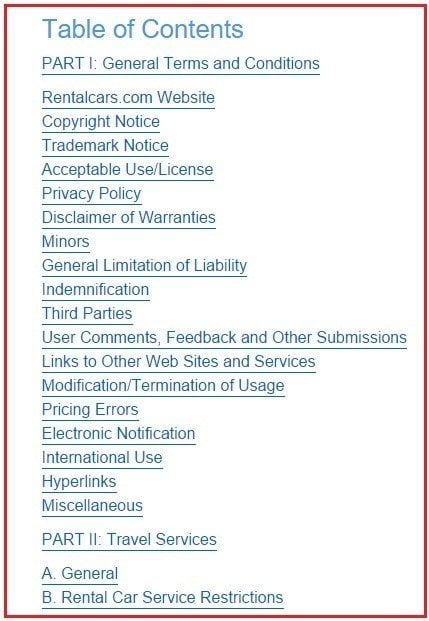
A Terms and Conditions agreement is not required by law, dissimilar a Privacy Policy, but it's highly recommended to have one as you can forbid abuses happening to your website or mobile app, and to limit your own liability equally the owner of the online business.
Without this kind of agreement in place, and without it being properly enforced, there'due south no way for y'all can legally limit or control how anyone tin employ or can't use your website or app.
Problems of copyright infringement can appear if users make use of your content without your permission or issues of abuses such every bit someone spamming other users or posting defamatory content on your website.
A Terms & Conditions agreement lets y'all include language to forbid such activeness, and tin can besides provide a remedy (such as accounts deletion) in the event these abuses exercise occur.
It'southward highly recommended that online business concern (regardless if they operate just a simple website or a simple mobile app) that permit or crave a user to register for an business relationship have this agreement in place and present information technology to users at the fourth dimension of their business relationship registration.
Desktop apps also benefit heavily from having a T&C, as well benefiting from having an EULA.
The Terms and Atmospheric condition tin can exist named anything you'd like. Mutual names for this agreement include a Terms of Use, Terms of Service, or User Agreement. What you call this kind of legal agreement isn't as of import equally what'due south actually in the agreement.
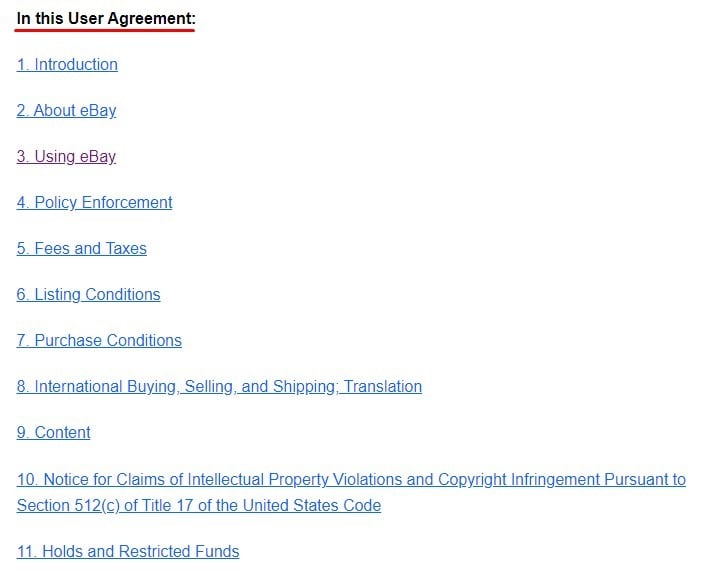
eBay calls this kind of understanding a "User Understanding." Information technology includes relevant information regarding using the eBay'due south website, intellectual property issues, purchasing and listing atmospheric condition, disclaimers of warranties and limitations of liability, and a section on enforcement of the policy:
Instagram calls this kind of understanding a "Terms of Use." It includes data on using the service, virtually copyright violations, the rights of users, limitations of liability for the visitor, and more.
Twitter calls this kind of legal agreement a "Terms of Service." Sections such as limitations, rights, and licensing information for those who employ the service are included, every bit well every bit standard restrictions, disclaimers, and account termination sections.
What to Apply: A Single Agreement or Separate Ones
If you're going to have both legal agreements - i Privacy Policy agreement and one Terms & Conditions agreement - always go on them separate.
While both agreements can reference each other, and the T&C agreement tin can take a section relating to privacy (which should link to the Privacy Policy), you should create two separate legal agreements.
Remember that it'due south also required past CalOPPA and other laws to have the give-and-take "Privacy" in the link name.
Keeping these agreements separated makes it easier for users to browse both legal agreements and to sympathise that there are multiple legal agreements to be aware of.
Here'south the list of sections in the Terms and Weather condition agreement of Jump Tomorrow:
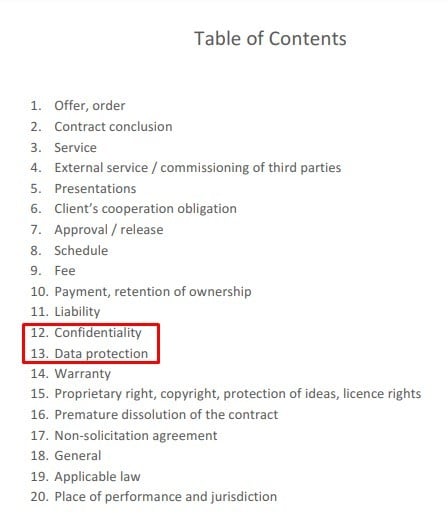
You can see how it covers problems that relate to privacy in its Terms and Weather agreement such every bit confidentiality and data protection.
And hither's how Denizen's Bank has some issues of privacy in its Terms and Conditions besides:
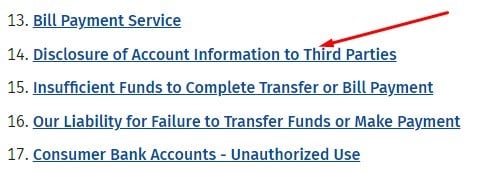
If you were to just include the entire content of your privacy practices in a Terms & Weather condition agreement without a carve up, clearly labeled Privacy Policy, you won't comply with CalOPPA and other privacy police force requirements.
Here's the "Privacy" department within Twitter'southward Terms of Service. It mentions basic privacy info, as well every bit a link to Twitter's full and separate Privacy Policy understanding:
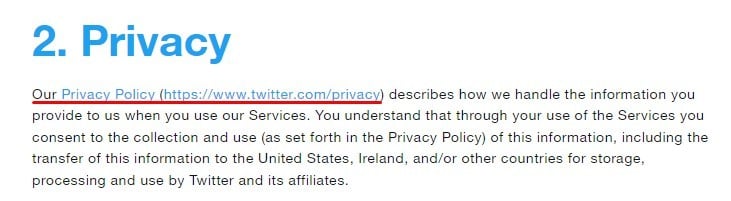
This tin can be a groovy mode to bring information about your privacy practices into the Terms & Conditions agreement and still maintain a separate agreement that deals with your privacy practices.
Here's what you should keep in heed for Privacy Policy agreements:
- Create this agreement separately from all other legal agreements. Include information that needs to be disclosed as required by CalOPPA and other privacy laws.
- Brand sure the agreement is an honest and accurate reflection of what personal data you actually collect and how you actually use that data.
- Include the word "Privacy" in the name of this understanding and in any links you provide that link to this legal page.
- Make sure this agreement is its own split understanding, regardless where y'all display it: in your website's footer section, on one of your mobile app's screens, so on.
Privacy Policies should document your privacy practices. Update information technology as soon as annihilation changes, such every bit if you begin to collect a different type of personal information from your users, or if you brainstorm to allow third parties to access the information when you didn't in the past.
Here's what you should go along in mind a Terms & Conditions agreement:
- You can create this agreement to include licensing rights, rules and guidelines for your users.
- Include a department that allows yous to terminate user accounts in the event of abuses, or nether whatsoever circumstances at your discretion.
- This understanding is where you can maintain control over your website or app, so brand sure to include any limitations and restrictions that you want to exist able to enforce.
Summary
In sum, these legal agreements are very different.
A Privacy Policy is legally required, while a Terms and Conditions agreement is not.
A Terms and Atmospheric condition understanding spells out how users tin collaborate with your site or service, while a Privacy Policy lets users know how you will interact with their personal information.
Both are very beneficial to accept, whether you're striving for legal compliance, or good customer relations and business organization trustworthiness.
Source: https://www.termsfeed.com/blog/privacy-policies-vs-terms-conditions/
0 Response to "Is a Review Policy the Same as a Privacy Policy"
Post a Comment